Inleiding
In high-occupancy athletic infrastructure, a tennis net is not a passive asset; it is a critical, dynamic component subjected to structural loading. For sports club operators, municipal procurement departments, and premium distributors looking for options in commercial tennis net wholesale, purchasing choices must move beyond unit economics and look into chemical material science. Selecting netting that fails to match ITF court dimensional baselines or prematurely sags under mechanical friction degrades court premium and accelerates operational replacement costs.
This technical brief analyzes why advanced tennis net material engineering—specifically focusing on braided High-Density Polyethylene (HDPE)—is the absolute engineering baseline for modern 2026 facility standards.
- Inleiding
- 1. Tensile Strength Retention: The Physics of the 30-Ply Braided Weave
- 2. UV-Stabilized Polymer Engineering: Combating Material Creep in 2026
- 3. Structural Adhesion: Heavy-Duty Headbands and Vinyl Weatherproofing
- 4. Conclusion: Upgrading Your Athletic Supply Infrastructure
- [REQUEST AN HDPE MATERIAL AUDIT]
1. Tensile Strength Retention: The Physics of the 30-Ply Braided Weave
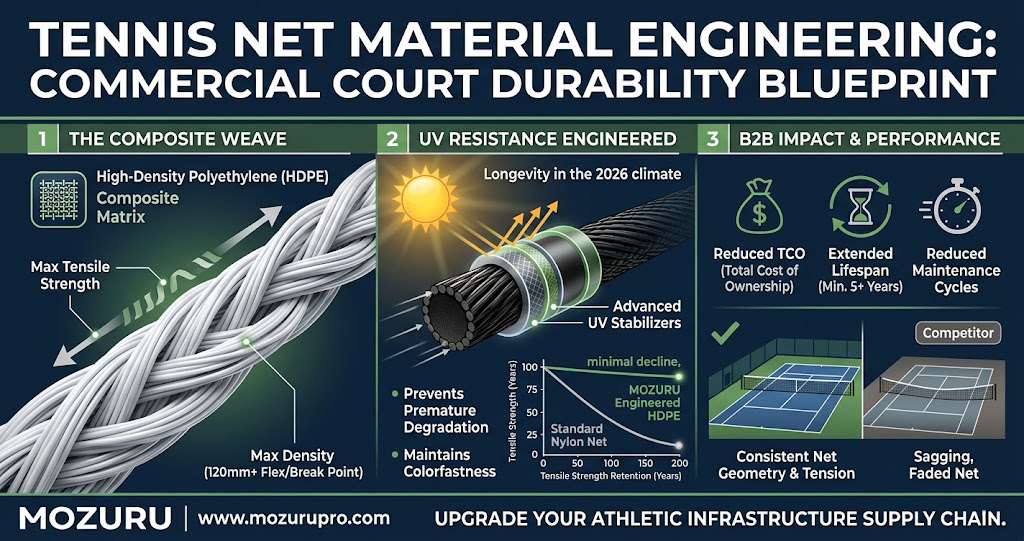
A standard professional tennis net must withstand a constant static top-cable tension of nearly 500 lbs to maintain its competitive center height of 36 inches. Cheap, unoptimized nets constructed from economy-grade nylon or low-tier twisted polyethylene experience significant material creep—a physical phenomenon where polymer chains permanently stretch and deform over time under sustained mechanical load.
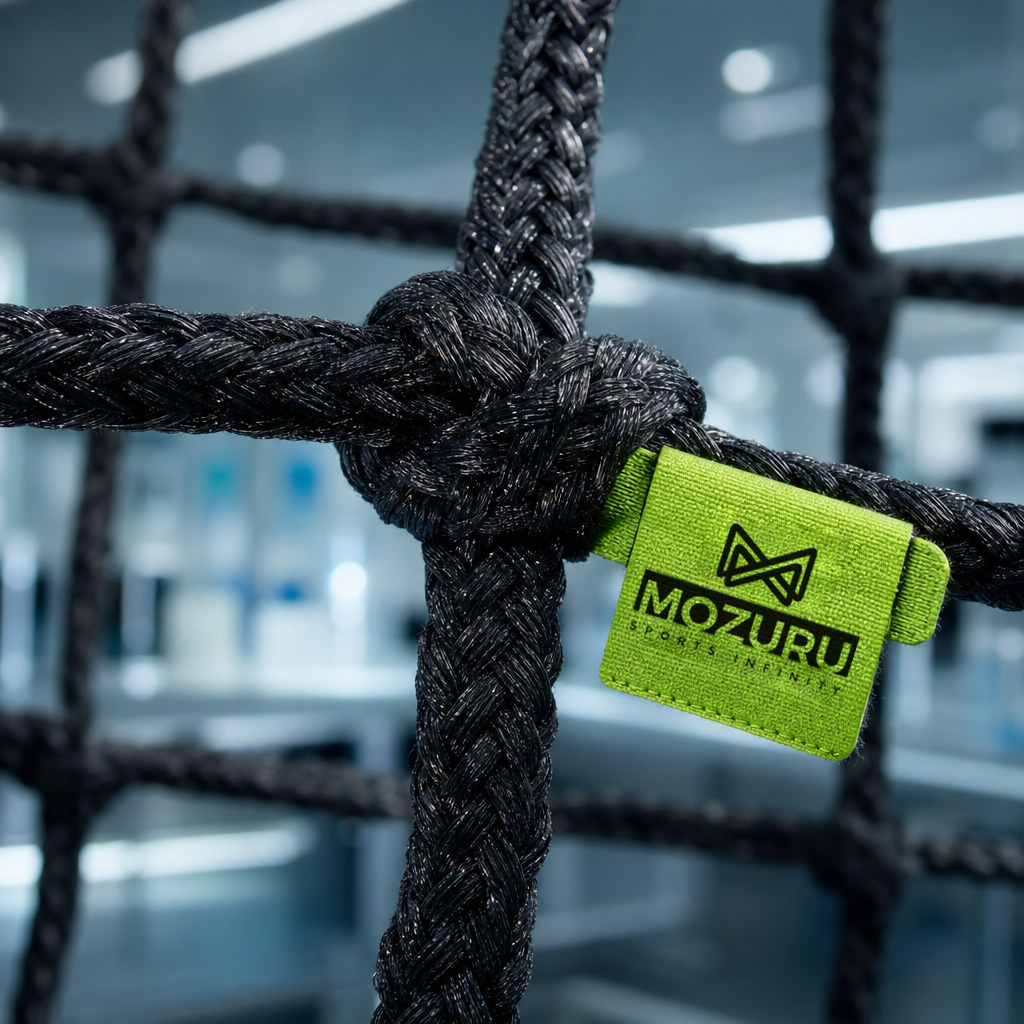
To eliminate this bottleneck, MOZURU forces rigorous standards onto our production line. We utilize professional 30-ply braided high-density polyethylene tennis net fibers. Unlike twisted strands, braided architectures distribute kinetic impacts evenly across the interlocking fiber matrix.
When a 120 mph tennis ball collides with our net, the braided nodes absorb and dissipate the localized kinetic energy instantly, eliminating node slippage and maintaining flawless net geometry. For regional distributors focusing on commercial tennis net wholesale, supplying a net that resists stretching ensures long-term client retention and minimal warranty claims.
2. UV-Stabilized Polymer Engineering: Combating Material Creep in 2026
Outdoor commercial courts are exposed to harsh solar environments. Ultraviolet (UV) radiation is highly destructive to unprotected synthetic polymers, breaking down the internal carbon-carbon bonds and causing premature brittleness, fiber shedding, and catastrophic splitting.
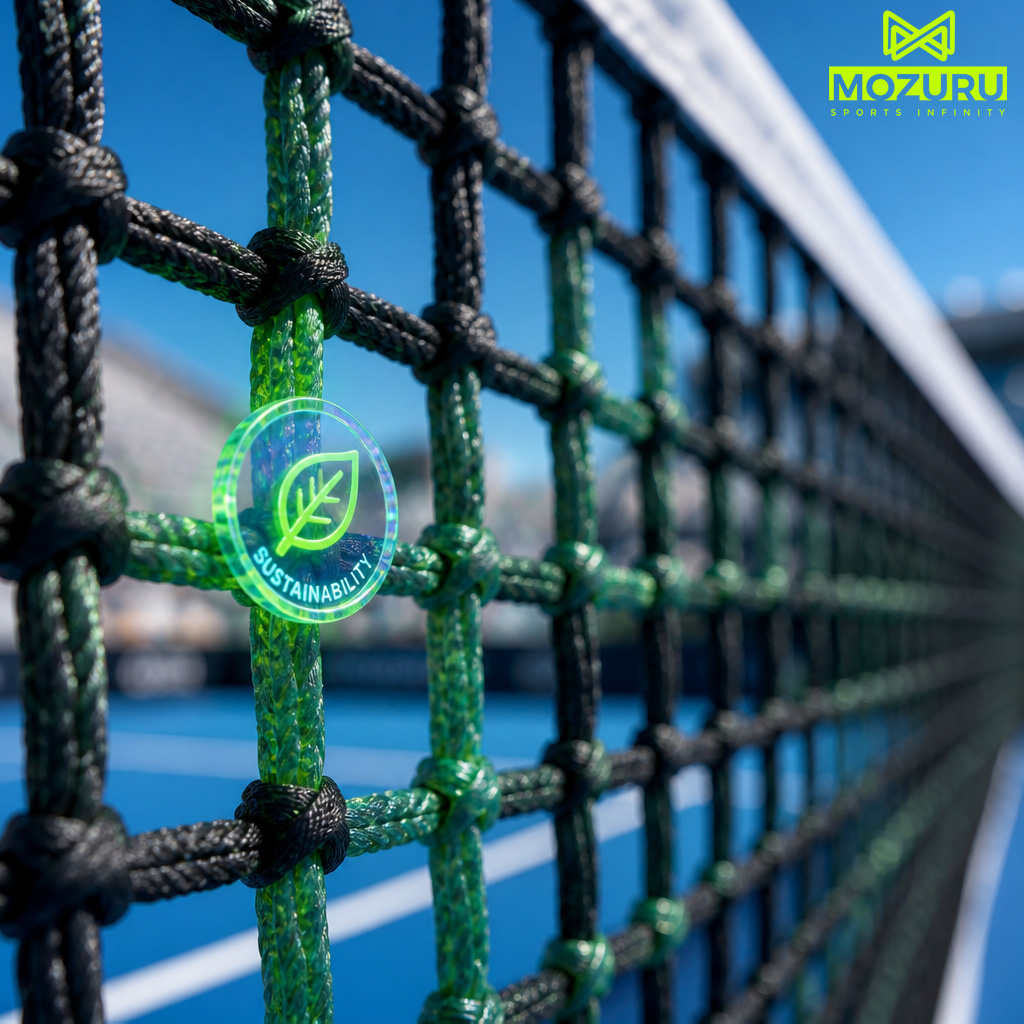
Our specialized tennis net material engineering resolves this through advanced extrusion-level formulation. Instead of applying a temporary topical spray coating, we integrate premium carbon-black and hindered amine light stabilizers (HALS) directly into the raw HDPE molten matrix before extrusion.
This creates a UV resistant tennis net supplier framework that guarantees material flexibility and colorfastness even under intense heat indices. Below is a standard engineering comparison between MOZURU engineered HDPE and standard market alternatives:
| Technical Material Metric | Economy Twisted Nylon Netting | MOZURU Braided HDPE System (2026) |
| Tensile Strength (Break Load) | ~220 lbs | ≥480 lbs (Extreme Heavy-Duty) |
| Yarn Matrix Architecture | 21-Ply Twisted Strand | 30-Ply Interlocking Braided Weave |
| UV Degradation Resistance | Poor (Topical Treatment, Fades in 12 Months) | Excellent (Integrated HALS Compound, 5+ Years) |
| Moisture Absorption Rate | High (~8% Water Retention, Leads to Sagging) | 0.0% (Completely Hydrophobic, Stable in Heavy Rain) |
| Total Cost of Ownership (TCO) | High (Requires Replacement Every 1.5 Years) | Extremely Low (Built for Multi-Year Field Lifespan) |
3. Structural Adhesion: Heavy-Duty Headbands and Vinyl Weatherproofing
A high-performance net body is ineffective if its connection points fail. The top headband represents the highest stress zone of any netting ecosystem. MOZURU reinforces this boundary by deploying heavy-duty, multi-layered vinyl headbands secured with four rows of lock-stitching utilizing bonded, UV-stable polyester threads.
By operating as an engineering-focused factory rather than a generic trading broker, we ensure that every structural seam resists raw shear stress. Choosing our manufacturing team as your strategic partner for commercial tennis net wholesale gives you direct access to institutional (tenders) where structural certification is mandatory.
4. Conclusion: Upgrading Your Athletic Supply Infrastructure
In the hyper-competitive racket sports market, B2B profitability is achieved by reducing operational friction and extending field lifespans. Investing in advanced polymer engineering is the most reliable way to optimize your portfolio.
As you expand your product lines across multiple sports, make sure to read our comprehensive Tennis Court Equipment Manufacturing Blueprint to understand how our material science scales across full-court infrastructures, or review our parallel guide on Pickleball Paddle Composite Engineering to maintain absolute quality alignment across your racket sport catalogs.
[REQUEST AN HDPE MATERIAL AUDIT]
Need to review our formal laboratory tensile data or request physical 30-ply braided HDPE material swatches? Click here to [Contact Our Materials Engineering Team for a Wholesale Quote] today. Let our field engineers optimize your bulk container allocation, compliance certifications, and seasonal procurement schedules.